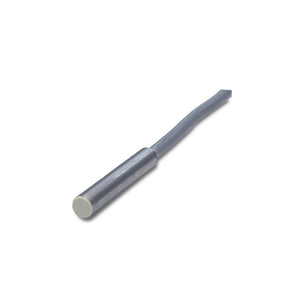
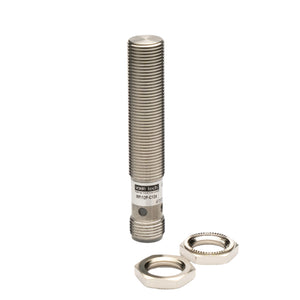
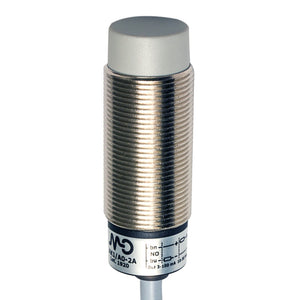
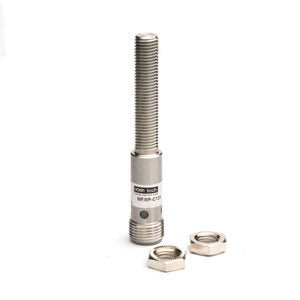
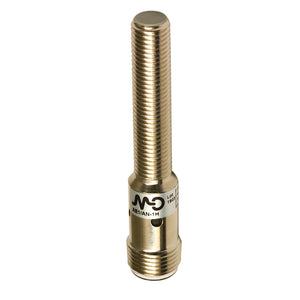
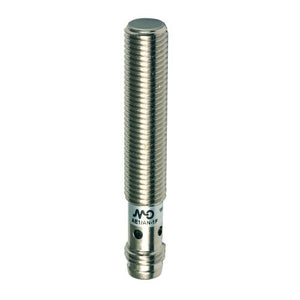
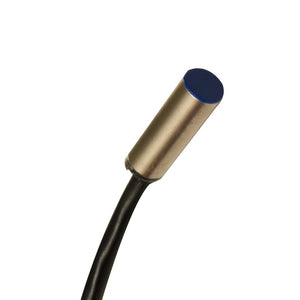
Inductive Proximity Sensor
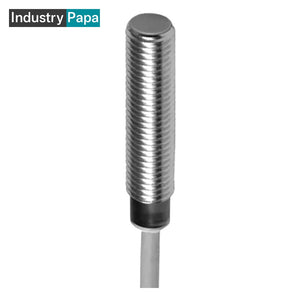
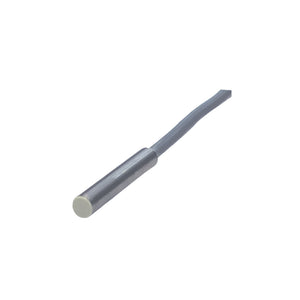
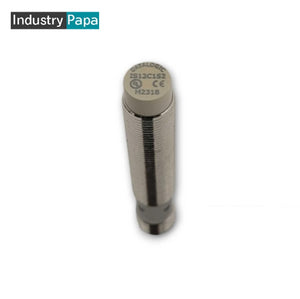
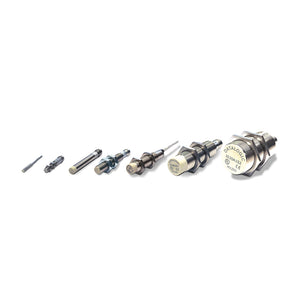
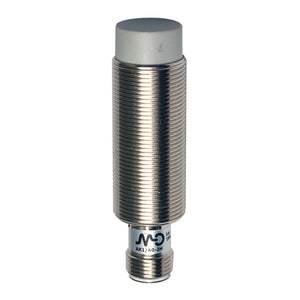
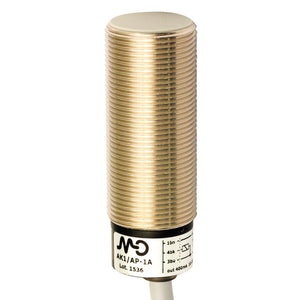
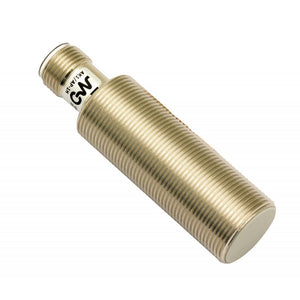
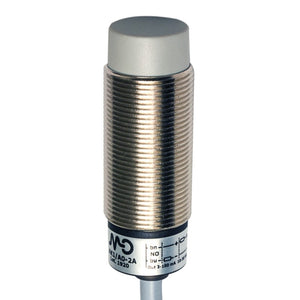
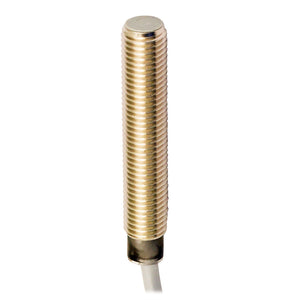
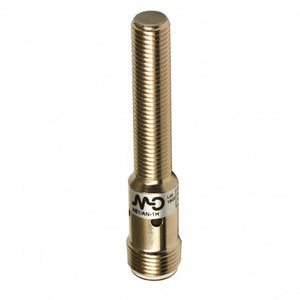
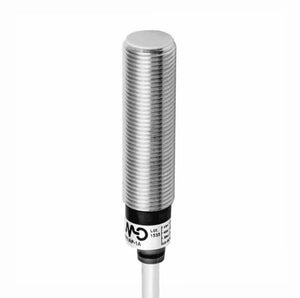
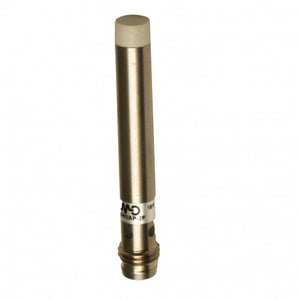
Inductive proximity sensors detect metal without touching it — the standard position, end-of-travel and counting sensor on almost every machine. Industrypapa stocks 94 of them: Micro Detectors AK, AE, AM, AD and AT series, Datalogic IS-05 to IS-65, and the VoxinTech VTIN and MF ranges, in M5 through M30 barrels and 40 mm square blocks. GST invoice, pan-India delivery.
Shielded or unshielded — the choice that matters most
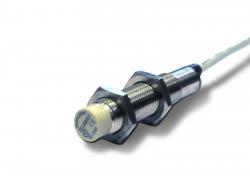
Every other decision follows from this one. A shielded (flush-mountable) sensor has a metal collar around the coil that concentrates the field forwards, so it can be buried flush in a steel bracket or machine casting without the surrounding metal triggering it. An unshielded (non-flush) sensor radiates sideways as well, which buys you roughly double the sensing distance — but it must stand proud of any metal around it, with a clear zone at the sides.
Fitting an unshielded sensor flush into a steel plate is the single most common installation fault we get called about. The sensor sees the mounting hole and latches on permanently. If the sensor has to sit flush, it has to be the shielded version, and you accept the shorter range.
Sensing distance depends on what you are detecting
The rated sensing distance on a datasheet assumes mild steel. Every other metal reduces it, because the sensor works by inducing eddy currents in the target and some metals absorb far less energy than others. As a rough working guide:
| Target material | Approximate factor | What that means in practice |
|---|---|---|
| Mild steel | 1.0 | The rated figure on the datasheet |
| Stainless steel | ~0.7 | Roughly two-thirds of the rated distance |
| Brass | ~0.4 | Under half — size up the sensor |
| Aluminium | ~0.35 | About a third; common cause of intermittent detection |
| Copper | ~0.3 | The hardest common metal to detect |
Treat these as planning figures and confirm against the datasheet for the exact code. The practical rule is to install at roughly 70% of the usable distance so there is margin for vibration, thermal drift and a target that is not perfectly flat.
The ranges we stock
| Series | Brand | What it is |
|---|---|---|
| AK1 / AK6 | Micro Detectors | Barrel sensors in PNP and NPN, cable and connector versions |
| AE1 / AE6 | Micro Detectors | Widely used general-purpose barrel range |
| AM1 / AM6 | Micro Detectors | Barrel sensors including 4-wire and DC two-wire versions |
| AD1 / AT1 / AH1 / AHS | Micro Detectors | Alternative housings and sensing distances |
| IL1 / IL5 | Micro Detectors | Rectangular block housings |
| IS-05 / IS-08 / IS-12 | Datalogic | M5, M8 and M12 barrels — the number is the thread size |
| IS-40 / IS-65 | Datalogic | 40 mm square block and larger formats |
| VTIN series | VoxinTech | Barrel sensors, thread and sensing distance encoded in the code |
| MF / MFT / VTMF | VoxinTech | Metal face versions for welding and wash-down |
| FMK6 / FME1 / PFK1 | Micro Detectors | Full-metal and special-purpose housings |
Reading the part number
Datalogic IS series
The number after IS is the barrel size in millimetres — IS-08 is M8, IS-12 is M12, IS-40 is the 40 mm square block. The blocks that follow set the sensing distance, output and connection.
Micro Detectors
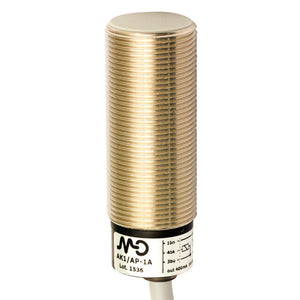
The letters before the slash identify the housing family. After it, P is PNP and N is NPN — AK1/AP-3A and AK1/AN-3A are the same sensor with opposite outputs. The trailing block is the connection and cable length.
VoxinTech VTIN
The digits read as thread then sensing distance: VTIN/1204N is M12 with 4 mm sensing and an NPN output; VTIN/1808P is M18 with 8 mm and PNP.
Connection codes
Codes ending C124 are M12 four-pin connector versions; 2M means a two-metre fly lead. Decide this at ordering — it is built into the part number.
Specifying one
- Thread and length — M5, M8, M12, M18, M30 or a square block, and whether the bracket takes a short or long barrel.
- Shielded or unshielded — decided by whether it mounts flush in metal.
- Sensing distance — against the actual target metal, not mild steel.
- Output — PNP or NPN, NO or NC, and what the PLC input card expects.
- Connection — M12 connector or fly lead, and the length.
- Environment — welding spatter, coolant or wash-down push you towards a metal face version.
Buying inductive proximity sensors in India
Industrypapa supplies inductive proximity sensors to OEMs, machine builders, packaging, automotive and pharma plants and to maintenance teams across India. The fast-moving M8, M12 and M18 sizes are held in stock and ship the same or next working day; anything else is quoted with a firm lead time. All orders are invoiced with GST and delivered pan-India, and we are happy to work from a bill of materials or a photograph of the old sensor if the code has worn off.
Related ranges: metal face proximity sensors, capacitive sensors, photoelectric sensors, ultrasonic sensors, connector cables and mounting brackets. For anything not listed, send us the part number.
Frequently asked questions
What is an inductive proximity sensor?
A non-contact switch that detects metal. It generates a high-frequency field at its face; a metal target entering that field absorbs energy from it, and the sensor switches its output. It detects metal only — use a capacitive sensor for plastics and liquids.
What is the difference between shielded and unshielded?
Shielded sensors can be mounted flush in metal but sense a shorter distance. Unshielded sensors sense roughly twice as far but need clear space around the head. Fitting an unshielded sensor flush in steel will make it trigger permanently.
Will it detect aluminium?
Yes, but at around a third of the rated distance. If the target is aluminium, brass or copper, either move the sensor closer or specify a larger sensor with more range in hand.
Can I swap a PNP sensor for an NPN one?
Only if the PLC input card accepts it. On most Micro Detectors codes the two versions differ by a single letter — AP against AN — so check the code carefully before ordering a replacement.